
Product Definition
HSS circular saw blades are made from high speed steel such as M2, M35, W5 or W6, then ground, heat treated and coated according to the cutting condition.
M2 and M35 HSS cold saw blades for steel tube, stainless steel pipe, copper, brass, aluminum and profile cutting machines.
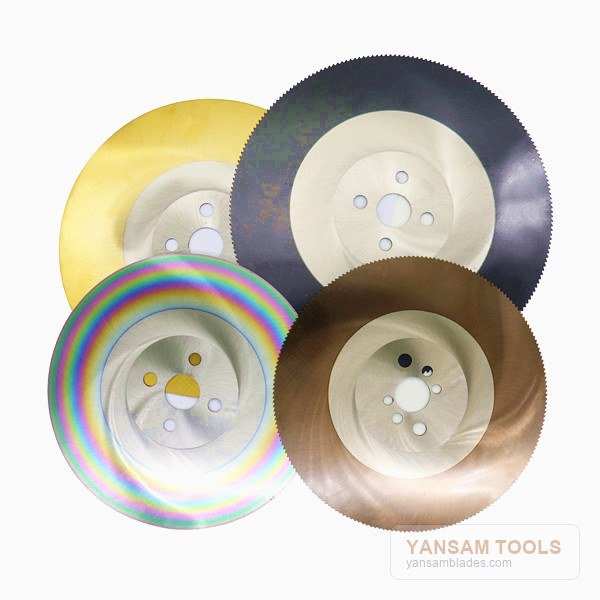
HSS circular saw blades are widely used for cold cutting metals with controlled speed, stable tooth geometry and suitable coating selection. Yansam Tools produces common and custom sizes according to machine model, cutting material and production requirements.
An HSS circular saw blade is a non-tipped high speed steel blade used for cold cutting metal tubes, pipes, bars and profiles. Unlike TCT or cermet blades, HSS blades do not have welded carbide or cermet tips, so buyers usually quote them by outer diameter, thickness, bore and tooth count.
HSS circular saw blades are made from high speed steel such as M2, M35, W5 or W6, then ground, heat treated and coated according to the cutting condition.
Common export wording is OD × thickness × bore × teeth, for example 250 × 2.0 × 32 × 220T. HSS and GF blades usually do not list kerf and plate thickness separately.
They are used for steel tube, stainless steel pipe, copper, brass, aluminum, thin profiles and selected solid sections on cold saw machines.
These are common sizes from our HSS specification sheet. Final selection still depends on machine fit, material and cutting problem.
| Small Blade OD | Common Bore | Common Teeth Options |
|---|---|---|
| 40mm | 13mm | 40T, 60T, 72T |
| 50mm | 13/16mm | 40T, 60T, 72T |
| 60mm | 16mm | 40T, 60T, 72T, 108T, 120T |
| 75-80mm | 22mm | 40T, 60T, 72T, 108T, 120T |
| 90mm | 22mm | 60T, 72T, 108T |
| 100mm | 22/27mm | 40T, 60T, 72T, 108T, 120T |
| 125mm | 27mm | 40T, 60T, 72T, 108T |
| 150-160mm | 32mm | 50T, 60T, 72T, 108T |
| 200mm | 32mm | 60T, 72T, 108T, 120T |
Large blades are often quoted by outer diameter and thickness. Bore options commonly include 25.4mm, 32mm and 50mm depending on machine model.
| Outer Diameter | Common Thickness | Common Bore |
|---|---|---|
| 250mm | 1.2 / 1.6 / 2.0 / 2.5mm | 25.4 / 32mm |
| 275mm | 1.2 / 1.6 / 2.0 / 2.5mm | 25.4 / 32mm |
| 300mm | 1.2 / 1.6 / 2.0 / 2.5 / 3.0mm | 25.4 / 32mm |
| 315mm | 2.0 / 2.5 / 3.0mm | 25.4 / 32mm |
| 325mm | 2.0 / 3.0mm | 25.4 / 32mm |
| 350mm | 2.0 / 2.5 / 3.0mm | 25.4 / 32mm |
| 375mm | 2.0 / 2.5 / 3.0mm | 25.4 / 32mm |
| 400mm | 2.0 / 2.5 / 3.0mm | 25.4 / 32 / 50mm |
| 425mm | 2.5 / 3.0mm | 25.4 / 32 / 50mm |
| 450mm | 2.5mm | 25.4 / 32 / 50mm |
Exact specifications depend on your machine and cutting condition.
| Blade Type | Best For | Common Advantage |
|---|---|---|
| M2 HSS Saw Blade | General metal cold cutting | Reliable performance and cost balance |
| M35 Co5 HSS Saw Blade | Tougher materials and longer cutting life | Improved heat and wear resistance |
| TiN Coated HSS Blade | General steel and non-ferrous cutting | Lower friction and improved wear resistance |
| TiAlN / TiCN Coated Blade | More demanding cutting conditions | Better surface hardness and heat resistance |
For HSS blades, the correct answer is usually a combination of material grade, coating, tooth pitch and machine condition.
| Cutting Condition | Selection Focus | What To Confirm Before Ordering |
|---|---|---|
| Thin-wall steel tube | Finer tooth pitch to reduce grabbing and burrs | Tube OD, wall thickness, bundle or single cutting, current tooth count |
| Stainless steel pipe | M35 or stronger coating may be considered when heat and wear are high | Material grade, coolant/oil mist, feed stability and cut surface photos |
| Solid bar or thick section | More chip space and stable feed are more important than simply choosing more teeth | Workpiece diameter, machine power, clamping and chip shape |
| Copper, brass or aluminum | Tooth geometry and anti-sticking performance matter | Material softness, burr requirement, lubrication and whether chips stick to teeth |
| Frequent blade breakage | Check installation, flange, clamping, speed, feed and tooth damage pattern first | Broken blade photos, machine model, arbor/bore fit and operator process |
The blade body and coating should match the cutting material. Coating is useful, but it cannot fix a wrong tooth count or unstable machine.
A practical standard choice for many general metal cutting jobs where the customer needs stable performance and controlled cost.
Often selected for tougher cutting conditions where heat resistance and wear resistance need to be improved.
Can support chip flow and reduce friction in suitable applications, especially when lubrication and machine condition are controlled.
A common general-purpose coating option for many steel and non-ferrous cutting applications.
Often considered when higher surface hardness and wear resistance are required, depending on material and cutting heat.
Usually discussed for more demanding heat conditions, but still needs correct speed, feed and coolant support.
To recommend the correct HSS circular saw blade, please send blade diameter, thickness, bore size, tooth number, coating requirement, cutting material, machine model, cutting problem and quantity.
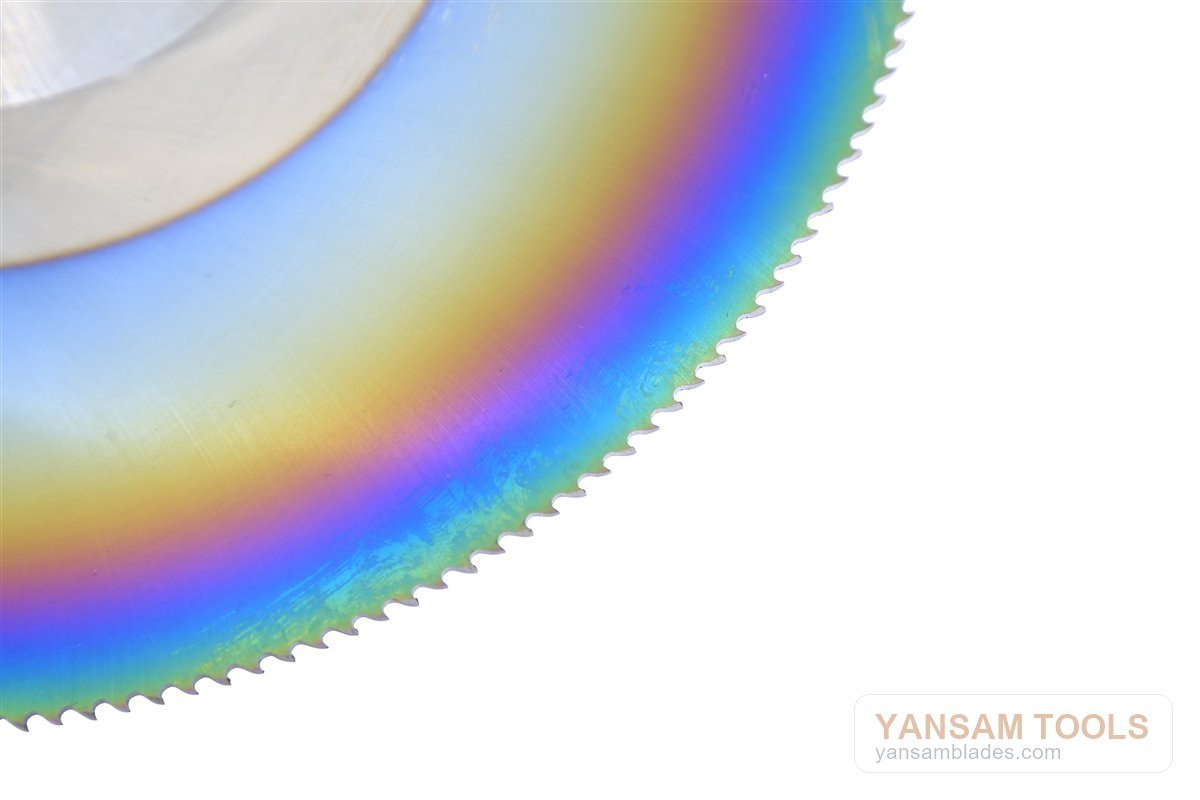
Large HSS circular saw blades need correct break-in, feed, speed, coolant and regrinding to achieve stable life.
For a new or freshly reground blade, reduce feed speed during the first 10 minutes so the blade and machine have a proper running-in period.
Hard or high-toughness materials such as stainless steel usually need slower feed. When the workpiece section is small, machine speed can be adjusted upward carefully.
Fine powder-like chips suggest low cutting pressure; thick soft chips suggest overload; long spiral chips usually indicate a better cutting state.
Common questions from metal cutting buyers.
An HSS circular saw blade is a high speed steel circular blade without welded carbide tips. It is used for cold cutting metal tubes, pipes, profiles and selected solid sections.
Use outer diameter × thickness × bore × tooth count, for example 250 × 2.0 × 32 × 220T. For HSS and GF blades, kerf and plate thickness are usually not separated because the blade is not tipped.
M2 is a common HSS material for general metal cutting. M35 contains cobalt and is usually selected when the cutting condition needs better hot hardness, wear resistance or more stable life.
TiN is a common general-purpose coating. TiAlN and TiCN are often selected for more demanding cutting conditions. VAPO or black oxide can help chip flow and reduce friction in specific applications.
VAPO is a steam-treated oxide surface used on some HSS blades. It can help reduce friction and support chip flow, but it still requires correct speed, feed, coolant and tooth count.
Tooth pitch should match tube wall thickness, material hardness and feed condition. Thin-wall tube often needs more teeth, while thicker sections need enough chip space to avoid overload.
Yes. Bore size, pin holes, keyways, tooth count and coating can be customized according to your machine drawing, sample blade or confirmed blade data.
The bore is the main center hole that fits the machine arbor. Pin holes are auxiliary locating holes used to match the machine drive pins or positioning pins.
Common causes include wrong cutting speed, unstable clamping, dull teeth, poor chip removal, incorrect tooth count, unsuitable coating, material hardness changes or poor regrinding quality.
Many large HSS blades can be reground when the plate is not cracked or deformed. Regrinding quality, tooth geometry and coating condition should be checked before reuse.
Send outer diameter, bore, thickness, tooth count, material grade, coating request, machine model, cutting material, solid or tube size, quantity and any sample photos or drawings.
For HSS circular saw blades, coating and tooth pitch should be selected from the real cutting condition, not only from blade diameter.
Best first message: OD + bore + thickness + teeth + material + coating need + current problem photo.
Connect HSS blade specifications with coating choice, cutting material and machine condition.
Review the full selection checklist before choosing tooth count or coating.
Check break-in, coolant, regrinding and common abnormal cutting causes.
HSS circular saw blade performance depends on material grade, heat treatment, tooth form, coating and correct operating parameters. A good replacement blade should match both the machine and the real cutting problem.
Send the machine model, current blade size, material and cutting problem. Drawings, nameplate photos or sample photos help us confirm the specification faster.
TiN, TiAlN, TiCN and VAPO are selected by material, heat, lubrication and cutting speed. Current failure photos help narrow the coating choice.
Common causes include wrong tooth pitch, poor coolant, excessive speed, unstable clamping, unsuitable coating or incorrect tooth form.
Yes. Outer diameter, thickness, bore, tooth count and locating holes can be specified according to the machine.