
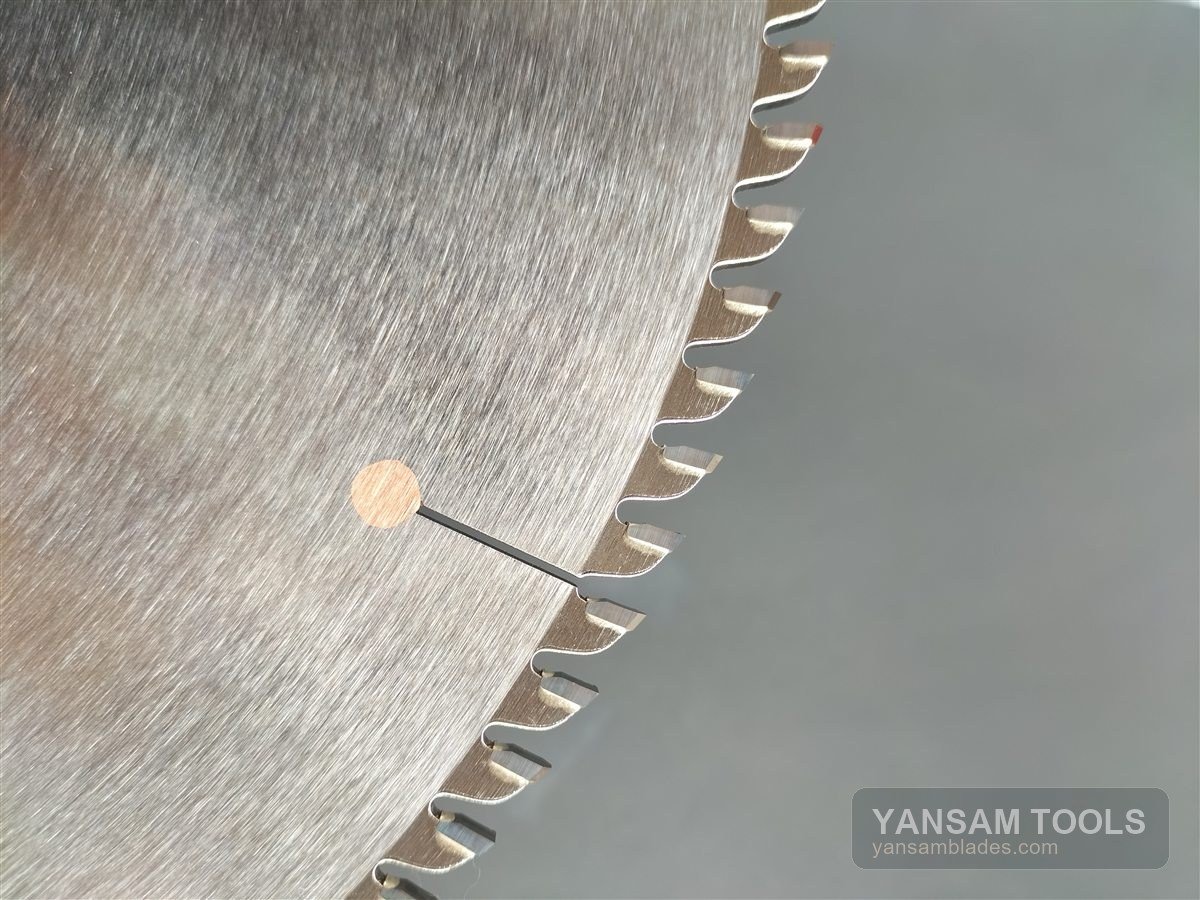
Tooth Geometry
Tooth shape should support clean entry and exit, stable chip flow and reduced edge damage.
Aluminum profiles need low burr, stable edge quality and controlled chip removal. The right TCT blade depends on profile shape, wall thickness, machine speed and clamping support.
For aluminum profiles, the blade is only one part of the system. Machine support, clamping and lubrication are equally important.
Tooth shape should support clean entry and exit, stable chip flow and reduced edge damage.
Suitable carbide helps maintain edge sharpness and reduces chipping under high-speed aluminum cutting.
Kerf, plate thickness and tension affect stability, noise, heat and profile surface finish.
Use the symptoms below to prepare a clear technical inquiry.
| Problem | Possible Cause | Information To Send |
|---|---|---|
| Burr on exit edge | Tooth wear, wrong tooth pitch, poor support or unsuitable feed | Exit burr photo, blade size, profile wall thickness |
| Rough surface | Runout, vibration, tooth geometry mismatch or unstable clamping | Cut surface photo, machine model, clamping method |
| Blade heats quickly | Chip evacuation problem, dull blade, wrong lubrication or feed mismatch | Lubrication type, speed, feed and chip photo |
| Noise or vibration | Plate instability, wrong blade body, machine runout or profile movement | Blade label, machine speed and short cutting video |
A photo or drawing of the aluminum profile often tells us more than a blade size. It helps confirm wall thickness, hollow sections, support risk and edge finish requirement.
Send your profile drawing, machine model and current burr photo for blade selection.
For aluminum profiles, a clean cut depends on tooth geometry, carbide grade, chip evacuation and stable clamping. The correct TCT blade may be different for thin extrusion, solid aluminum, window profile or industrial profile cutting.
Send a section drawing or photo. Hollow, thin wall and irregular profiles need different tooth engagement.
State whether the cut face is visible, anodized, painted or used before welding or assembly.
Confirm single or double head saw, feed method, lubrication and clamping pressure.
Send the machine model, current blade size, material and cutting problem. Drawings, nameplate photos or sample photos help us confirm the specification faster.
Hollow sections, thin walls and visible surfaces require careful tooth geometry, chip evacuation and clamping control.
Yes. A section drawing or photo helps select tooth geometry and avoid vibration or poor surface finish.
Single or double head saw type, feed method, lubrication and clamping pressure all affect blade choice.